

Bachelor Student Luise Endler: First Author of a Scientific Publication
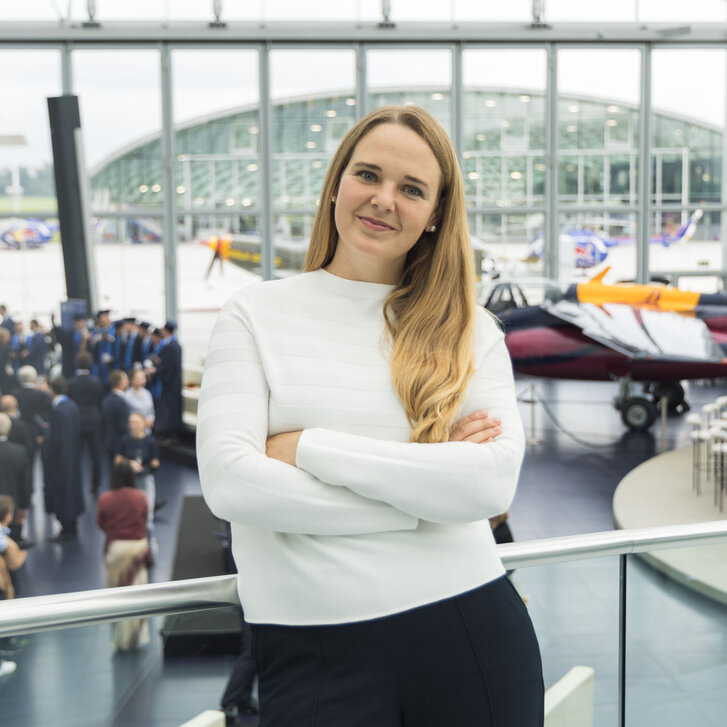
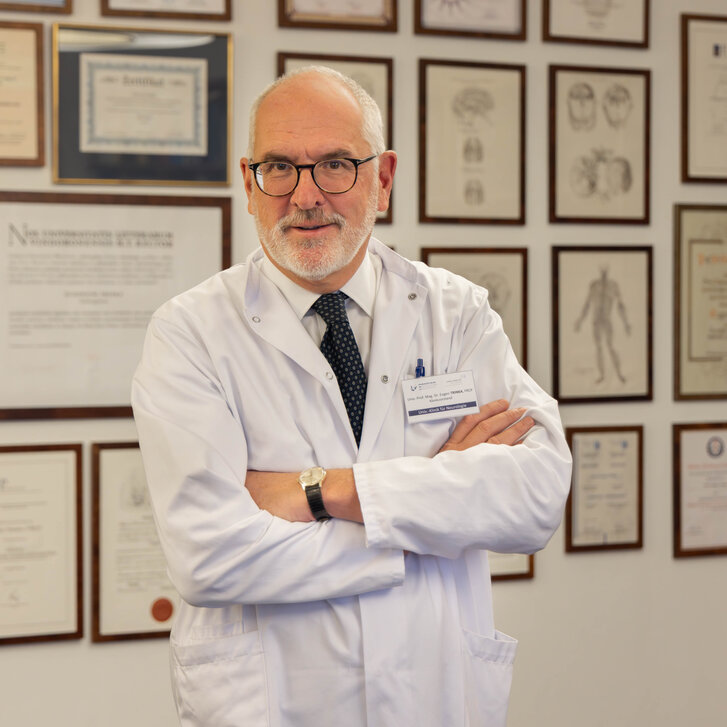
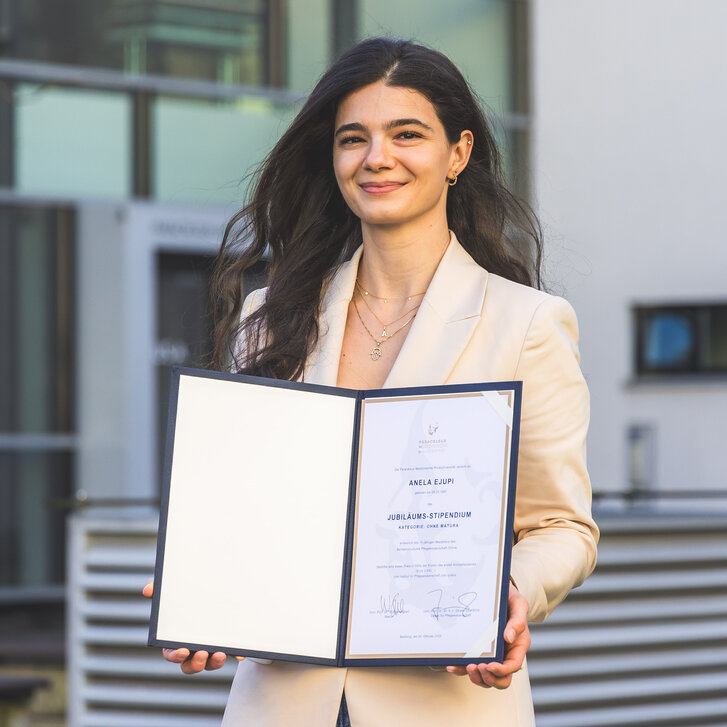
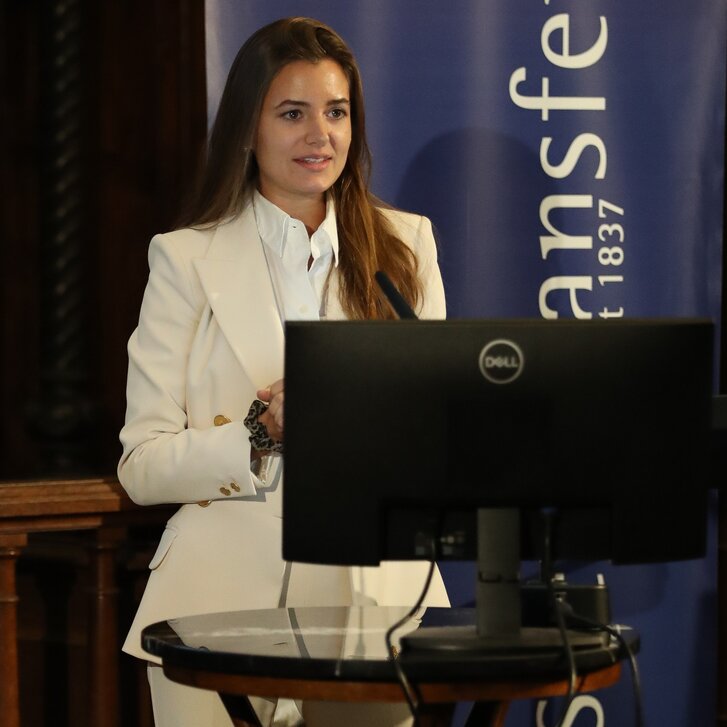
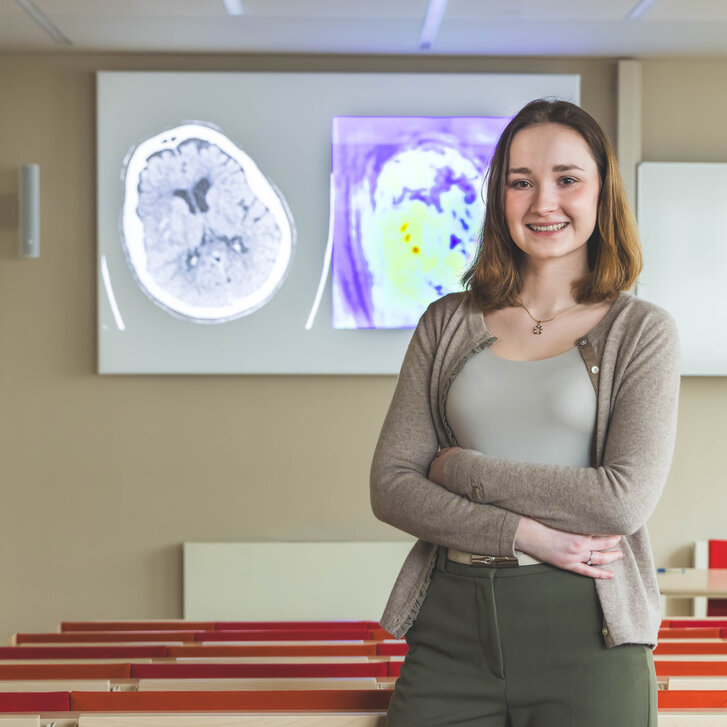
In the middle of her bachelor’s degree – and already the first author of a scientific publication: Congratulations, dear Luise Endler! Under the guidance of Univ.-Prof. Dr. Johannes Pfaff, the PMU student published a paper in a peer‑reviewed journal (Neurological Research and Practice). The study investigated AI‑assisted hemorrhage detection after endovascular stroke treatment. In this context, AI is used to automatically detect, localize, and classify brain hemorrhages in medical imaging procedures (CT scans). These systems act as a “second reader” for radiologists, with the goal of speeding up diagnosis and increasing accuracy.
After completing secondary school, Luise initially studied medicine in Vienna while also working in an analytics laboratory. Because she wanted a more personal academic environment with closer support and exchange, she transferred to Salzburg – for Luise, one of the most beautiful cities in the world. She is currently in her third year of studies (class of 2023).
Interview
Dear Luise, why do you study medicine?
Health is a central foundation of life, which is why the human body and its diseases have fascinated me since childhood. The desire to actively help people, as well as the versatility of medicine, motivate me to study human medicine.
Why PMU?
I appreciate the family‑like atmosphere and the enthusiasm of the lecturers, who personally support – but also challenge – every student. In addition, Salzburg is, for me, one of the most beautiful places in the world.
How did you come into contact with the research topic?
I came across the topic through Prof. Pfaff, who introduced his field and the possibilities of AI during a lecture in the first year. Afterwards, I chose the elective “Machine Learning in Medicine,” which allowed me to engage with the topic even more deeply.
What does this publication mean to you and your future scientific career?
I am overjoyed about being first author and would like to sincerely thank Prof. Pfaff for the excellent supervision and for initiating the publication of my bachelor’s thesis. For me, this is wonderful confirmation, and I would be delighted to continue working in research. This project also gave me valuable insight into neuroradiology, and I hope to pursue my training in that field.
What was the most exciting or challenging moment for you when working with AI‑supported analyses?
I think the greatest challenge is first understanding the basics of artificial intelligence and how it can be integrated into everyday clinical practice. AI is fascinating… one might assume it analyzes CT images better than the human eye, yet it also detects abnormalities that aren’t actually there, or misinterprets them. That must always be taken into consideration.
What do you take away from the research results?
Our study shows that AI does not replace a physician – but it can support good doctors in becoming even better. As promising as it is, it remains error‑prone and is no substitute for human expertise in radiology.
Publication:https://link.springer.com/content/pdf/10.1186/s42466-026-00457-9.pdf
Translated by M365 Copilot