

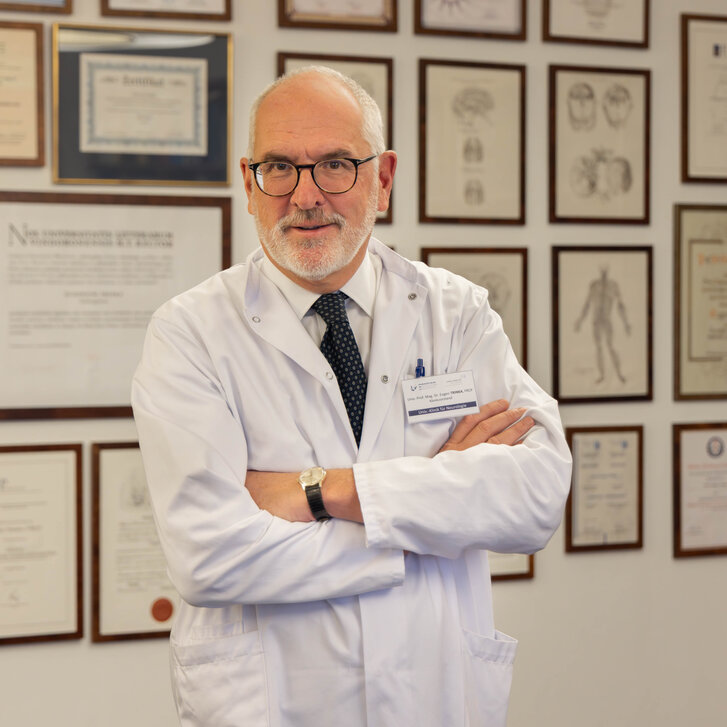
Neurologist Univ.-Prof. Dr. Eugen Trinka Ranked Among the World’s Most Cited Researchers
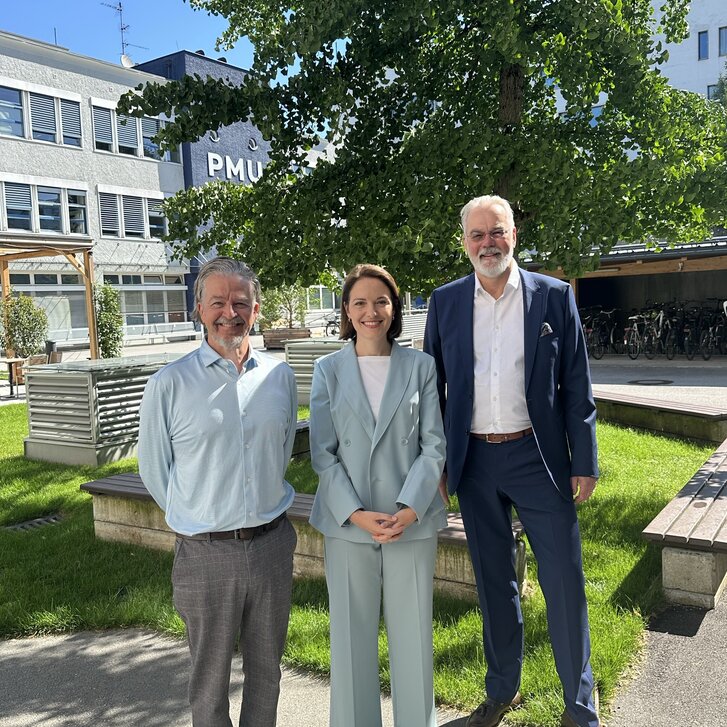
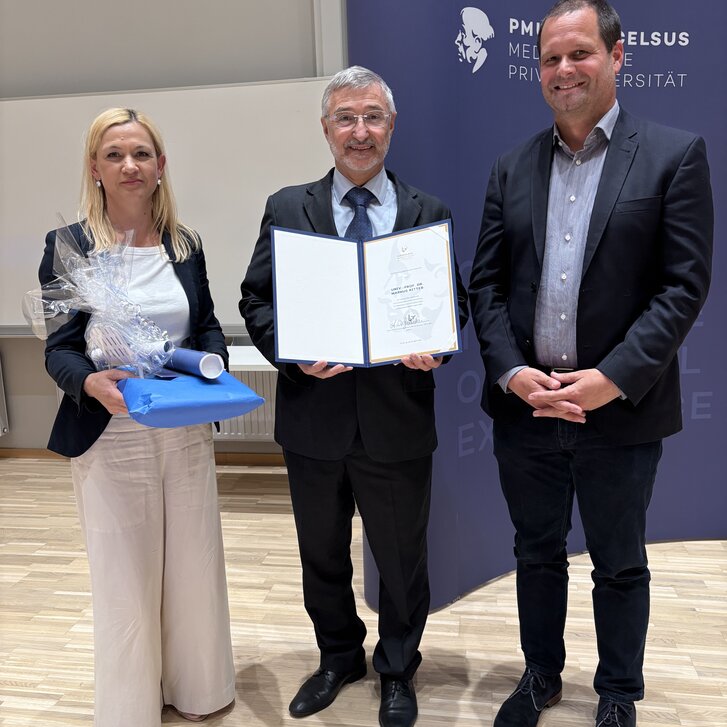
The head of the PMU University Clinic for Neurology has been honored as a “Highly Cited Researcher 2025”—the only Salzburg physician to receive this distinction. In an interview, the “physician-scientist” explains his passion for neurology and research. Univ.-Prof. Dr. Eugen Trinka discusses promising developments in his field and areas where progress is still needed.
Professor Trinka, what motivates you most about scientific work?
As a physician, you have multiple roles. In my view, medicine can only be practiced well if you are also engaged in research. This also serves to reflect on your own actions and behavior, both as an individual and as part of a team. What originally motivated me to study medicine was curiosity—about people, especially those who are ill. How do they experience illness? How does the body work, and what can be done when problems arise? I am also driven by the desire to question critically and explore new territory, rather than just reproducing existing knowledge.
Why did you choose neurology in particular?
It was a long journey. As a youth, I first wanted to become a chef, then I became interested in chemistry. At around 17, I decided to pursue medicine. In neuroanatomy, I very quickly felt “at home.” For me, it is one of the central key elements. Topics related to memory, identity, and the formation of autobiography fascinated me—questions about what makes a person who they are. All of this leads to neurology, because remembering, thinking, planning, and acting are at its core.
On the subject of “being human,” how would you describe yourself?
I would say I am determined, persistent, and deeply interested in both people and life itself—and I live it to the fullest.
Which aspects of your daily work bring you the most joy?
The most fulfilling days are those when I can make rounds at a relaxed pace, make decisions with the team, and treat patients. Of course, there are also tedious aspects to daily life. Unproductive meetings and bureaucracy are less satisfying.
In research, it’s especially rewarding when something succeeds. A publication brings joy at several stages: when submitting, upon acceptance, at publication, and later, when it is cited. But more important than formal success is the ability to question and advance existing views or medical dogmas. Over the years, you can see that you’ve actually made a difference. That fulfills me.
How long does it typically take to produce a scientific publication?
This varies greatly. Large projects with multiple sub-studies and teams often have a planning and time horizon of three to five years. Alongside these, there are smaller works, such as letters or case reports, which can be completed more quickly—often in collaboration with young colleagues or students. These are just as rewarding and important for training.
What does collaborating with younger colleagues mean to you?
With the habilitation, you take on the responsibility of passing on knowledge, skills, and enthusiasm. It’s wonderful to see young people find their own path. The fact that former colleagues, who are now heads of clinics, still remember our joint publications brings me joy. These long-term connections and the opportunity to inspire others are central to my mission.
You are among the most cited researchers in Austria. What does this influence mean to you, especially in terms of responsibility and health policy?
This isn’t something you plan consciously—you simply work continuously on topics you believe are important. With increasing visibility, however, comes greater responsibility to share experiences. This is not about personal vanity, but about promoting research and development. In addition to treatment, teaching, and research, physicians have a duty to address health policy issues—in my case, prevention and brain health. We must contribute medical perspectives in an understandable way, especially as economic pressures grow. Our goal is a healthy society, and existing resources must be used wisely.
Which current developments in your field do you find most promising—and where do you see deficits?
Two major developments stand out: artificial intelligence and genetics. AI is a powerful tool that can support many questions. However, it does not replace human judgment and must be used and integrated sensibly. The second major development is genetics. In neurology, there are already the first gene therapies, for example in epileptology—something that was hardly imaginable 15 years ago. This dynamism is impressive.
In my view, prevention and public health receive too little attention. If we made better use of health data, prevention and planning could be significantly improved. Countries like Scandinavia are already further ahead—we have some catching up to do.
translated by Le Chat